
Traveling With Pets
Flying With a Large Dog on a Private Jet Without Travel-Day Surprises
By PJReviews.com · August 7, 2026
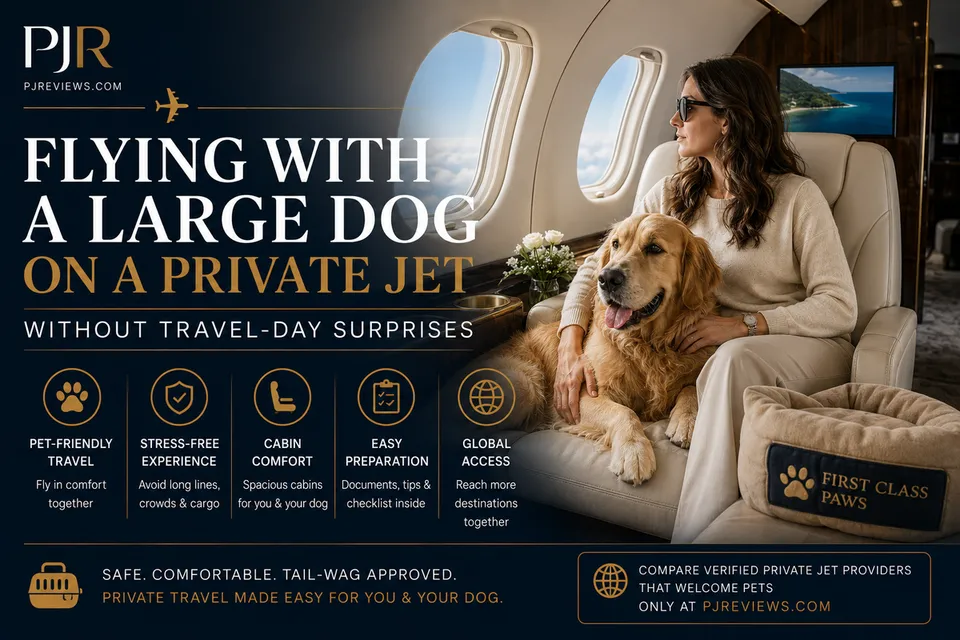
Private jet travel with a large dog can work well when the operator, aircraft, cabin plan, and destination paperwork are confirmed before the flight is booked. A large dog may be able to remain with the passengers in the cabin, but private aviation does not remove border rules, aircraft approval, or provider-specific pet policies. The safest plan starts with the route and works backward through the dog’s documents, supplies, behavior, and arrival requirements.
Large-dog air travel is easier to manage when the provider receives accurate information at the first quote request. The dog’s breed, weight, age, number of animals, crate or harness needs, and destination should be stated plainly. International routes require more lead time because the destination may require a health certificate, vaccination record, microchip, import permit, blood test, treatment, or quarantine. A private aircraft also has a cabin layout, crew, operator, and cleaning policy that need separate confirmation.
- Route and border rules: Confirm before booking
- Aircraft approval: Obtain written confirmation
- Pet documents: Match the destination rules
- Cabin plan: Prepare space, water, and waste supplies
- Return trip: Check re-entry rules before departure
Cabin Approval Starts With the Operator
Private aviation usually gives the provider more control over the cabin than a scheduled airline, but the operator still has to approve the animal and the aircraft arrangement. A broker or jet card provider may arrange the trip, while a licensed air carrier operates the aircraft. Those roles should be clear before the deposit or flight-hour deduction is made.
The quote request should include the dog’s size, weight, age, breed, behavior around strangers, and any medical needs. It should also state whether the dog will travel loose under supervision, in a carrier, in a travel crate, or with another approved restraint. The aircraft type and cabin layout can affect floor space, seating, access to a lavatory area, and the crew’s preparation plan. A provider should confirm the pet policy for the specific aircraft and operating carrier, not only describe a general company policy.
Commercial-airline rules are not a complete substitute for a private-charter plan. The private aviation pet-travel articles on PJReviews.com can provide related planning context, while the FAA explains that airline policies determine cabin access, container rules, and restrictions for scheduled flights. The FAA also states that cabin pet containers are carry-on baggage and must remain properly stowed during surface movement, takeoff, and landing. Those rules apply to the commercial context, but they illustrate why the operating carrier’s instructions still matter.FAA pet guidance
Documents Follow the Route
Pet travel documentation follows the destination, not the comfort of the aircraft. A private flight may avoid a commercial terminal, but customs, agriculture, public-health, and animal-import rules can still apply at the arrival airport. The provider can help identify the required documents, but the traveler remains responsible for giving the veterinarian and provider accurate route information.
Domestic travel often involves a health record, current vaccination information, and any state or local requirements at the destination. International travel may require an official health certificate, an accredited veterinarian, an endorsement, a microchip record, a rabies certificate, an import permit, or a treatment within a specific time window. Some destinations also use approved entry airports or require quarantine. The exact sequence matters. A certificate issued too early, a microchip recorded after a vaccination, or a missing endorsement can delay the trip.
- Departure country and arrival country
- Transit countries and technical stops
- Microchip number and implantation date
- Vaccination dates and certificate format
- Health-certificate issue and endorsement deadlines
- Import permit, quarantine, or approved-entry rules
Private Flights describes destination rules that may include microchips, vaccinations, health certificates, import permits, blood tests, parasite treatments, quarantine, or CITES permits, depending on the animal and route. Its page also identifies the company as a charter broker rather than a direct air carrier, so provider-specific assistance should not be mistaken for a government approval. The private-jet pet guidance is useful as a planning reference, while the destination authority and veterinarian remain the controlling sources.
Preparing a Large Dog for the Cabin
Cabin preparation begins several days before departure, not when the dog reaches the private terminal. A veterinarian can review the dog’s health, travel history, medications, and anxiety response. Sedation should never be added casually. The veterinarian should determine whether a calming plan is appropriate and explain how the dog should be monitored in flight.
Familiar equipment reduces avoidable changes. A dog that uses a crate should practice resting in the same crate before travel. A dog that does not use a crate may need a provider-approved harness, tether, mat, or other arrangement. The cabin should have absorbent pads, waste bags, water, a collapsible bowl, familiar food, medication if prescribed, and a small comfort item that does not create a loose-object hazard.
Feeding requires a balance between comfort and stomach upset. The provider or veterinarian may recommend a light meal rather than a large meal before departure, especially when the dog has a history of motion sickness. Water should remain available in a practical way, and the dog should have an opportunity to relieve itself immediately before boarding. The travel team should know how the dog reacts to unfamiliar people, engine noise, cabin movement, and changes in routine.
Questions That Prevent Last-Minute Changes
A useful pet-travel quote answers more than the hourly rate. The provider should identify the operating carrier, the aircraft category, the cabin arrangement, the pet approval process, and any cleaning or damage charges. The quote should also distinguish included services from pass-through costs and explain what happens if the aircraft, route, or departure time changes.
- Has the operating carrier approved this dog for this aircraft?
- Can the dog remain in the passenger cabin for every flight segment?
- Is a crate, harness, tether, or other restraint required?
- Where can the dog rest, drink, and relieve itself?
- Are pet cleaning, cabin preparation, or damage fees possible?
- Who checks the destination documents before departure?
- What happens if a border authority rejects a document?
- Can the return flight use the same aircraft and pet arrangement?
These questions also reveal how the provider handles responsibility. A clear answer identifies the party responsible for the aircraft, the documents, the customs process, and any schedule change. A vague answer is a reason to pause the booking and request the terms in writing. Provider reviews can add useful service context, but they cannot replace a route-specific approval or a current government rule.
Arrival Rules Can Change the Plan
The arrival process may be the most important part of the itinerary. A dog can travel comfortably and still face a problem at the border if a certificate, vaccination sequence, or entry permit does not meet the destination’s rules. The traveler should confirm the arrival procedure with the destination authority and the provider before the departure date.
Transit points deserve the same attention as the final destination. A technical stop may create a separate customs, handling, or animal-health requirement. A return trip may also require a new certificate or treatment window. The documents used to enter one country may not satisfy the rules for re-entering the United States or reaching a second destination.
Weather, airport operating hours, and ground transportation can affect the dog after landing. A provider should explain where the dog transfers from aircraft to vehicle, who handles the animal on the ramp, and whether the ground vehicle can accommodate the dog and equipment. The arrival plan should include water, temperature control, a secure leash or harness, and a direct route to the final accommodation or veterinary appointment.
Large-Dog Private Jet Questions
Large-dog private travel combines an aircraft decision with an animal-health and border-compliance decision. The answers below address common planning issues, but the provider and the relevant authority should confirm the details for each route.
Can a large dog stay in the cabin on a private jet?
Many private-charter arrangements can keep pets in the cabin, but the operating carrier and aircraft must approve the plan. Cabin space, restraint requirements, crew procedures, and cleaning terms vary. Written confirmation should identify the aircraft and the approved arrangement rather than relying on a general statement that pets are accepted.
Does private aviation remove international pet paperwork?
No. Private aviation may simplify the airport experience, but it does not erase destination-country rules. A route may require a health certificate, vaccination record, microchip, import permit, treatment, blood test, quarantine, or approved entry point. A veterinarian and the destination authority should confirm the sequence and deadlines.
Should a large dog travel in a crate?
The answer depends on the dog, aircraft, operator, and route. Some dogs are safer and calmer in a familiar crate, while another approved restraint may work better for a large dog in a cabin. The provider should state the required equipment before departure, and the dog should practice with it before travel.
How early should pet travel planning begin?
Domestic trips need enough time for provider approval and a veterinary review. International trips often need longer because certificates, endorsements, permits, vaccination intervals, and treatments can have fixed windows. The practical deadline comes from the strictest destination rule, so the route should be checked before a flight date is treated as firm.
A successful trip with a large dog depends on decisions that happen before the aircraft is selected. The route determines the documents, the operator determines the cabin plan, and the dog’s health and behavior determine the preparation. Each part should be confirmed separately.
PJReviews.com helps private flyers discover verified private jet providers, read provider reviews, and compare relevant pet-travel services before making a decision. Provider policies, aircraft approval, documentation, and destination rules still require direct confirmation.
- private aviation
- large dog air travel
- pet travel
- private jet pet policy
- cabin preparation